
Building · 4 min read
Validating the realities of Vibe Coding
Vibe coding can ship a calculator. But the moment you're building anything real, you hit a cliff. Three lessons from trying to build a WhatsApp voice agent that thinks it's me.

- Published
- Updated
Originally published on LinkedIn
Key takeaways
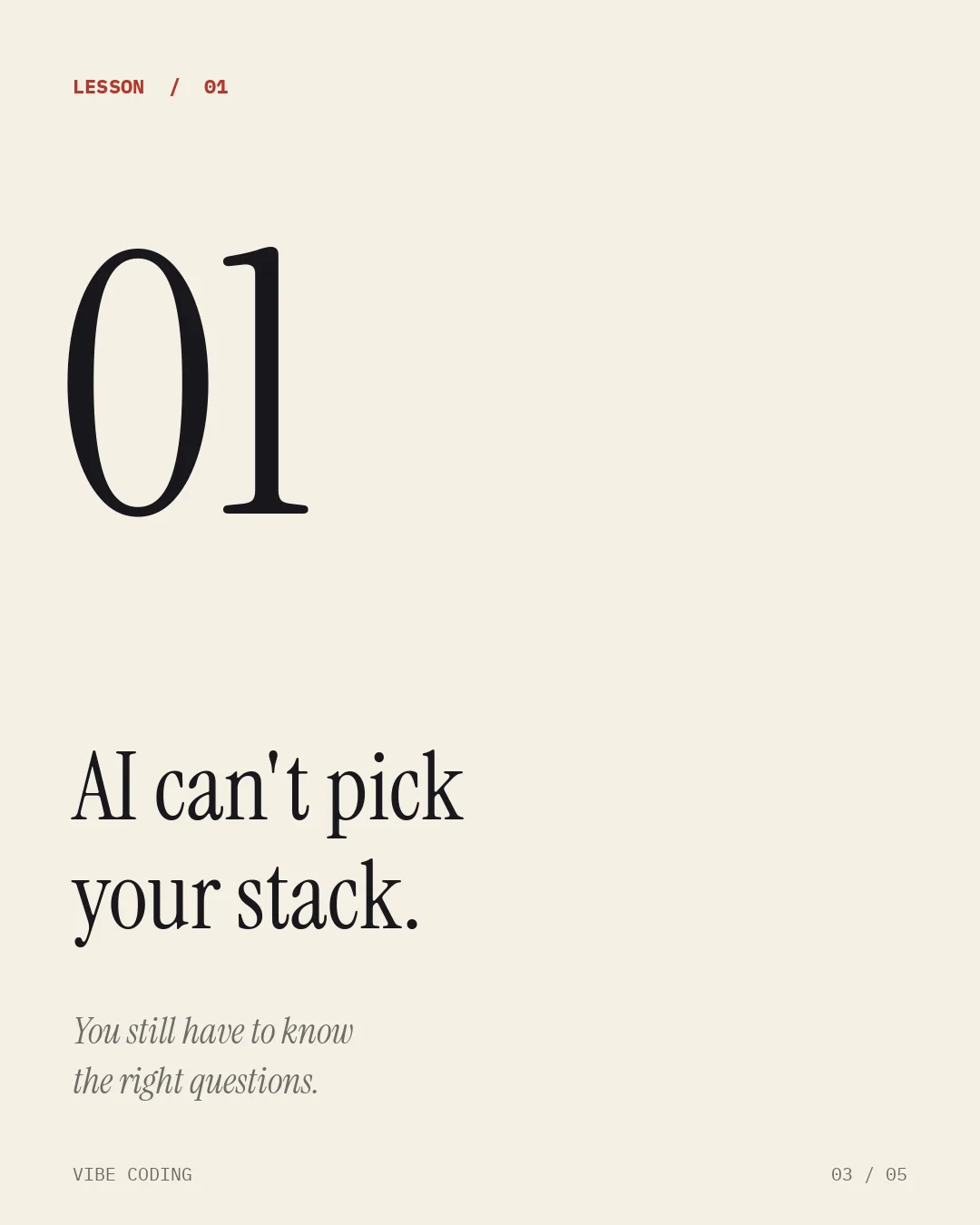
- AI can't pick your stack. Anything real (not a calculator) needs architecture, and the AI doesn't ask the questions. You have to.
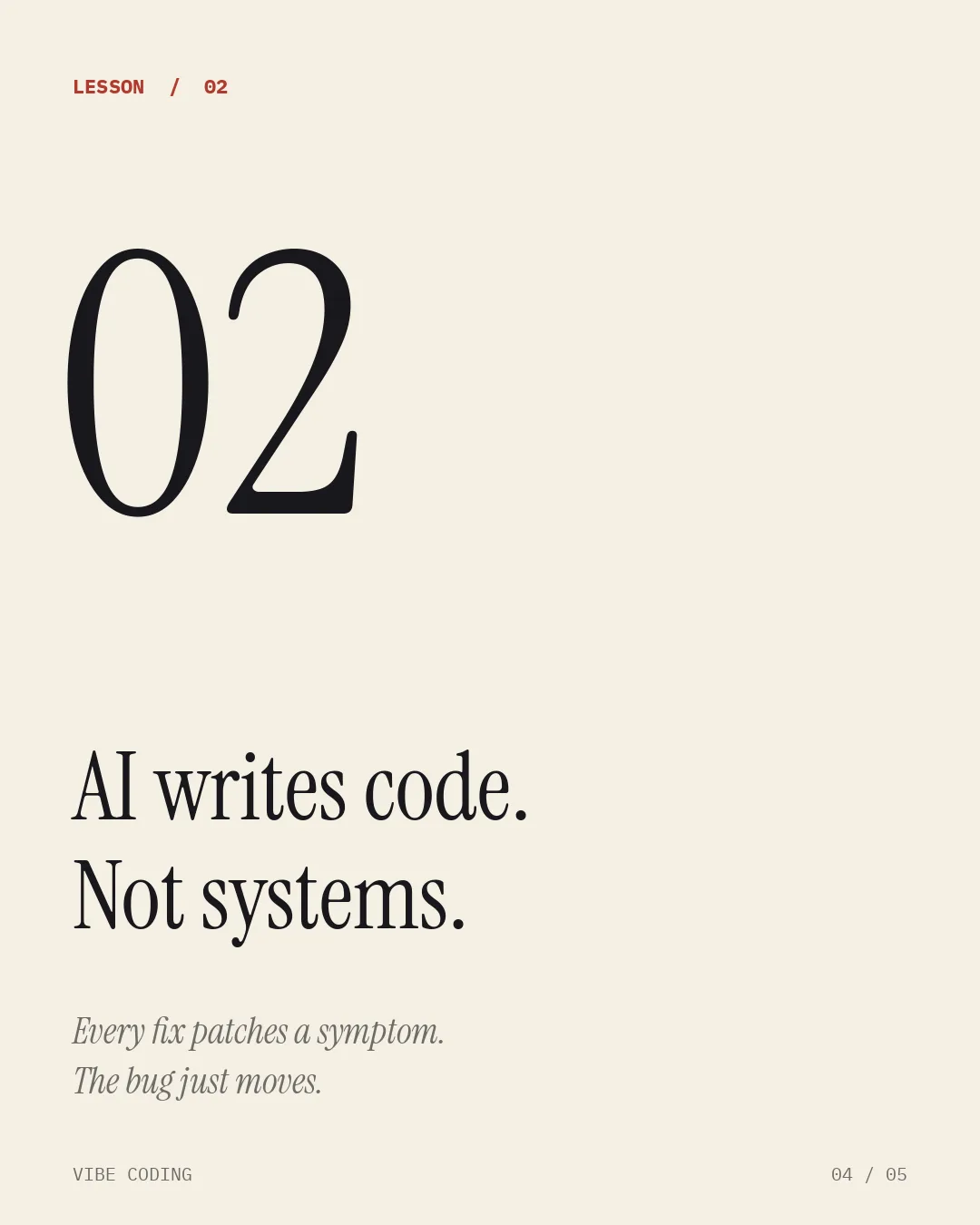
- AI sees the code. You see the system. If you don't understand the system, you can't tell the AI where to look.
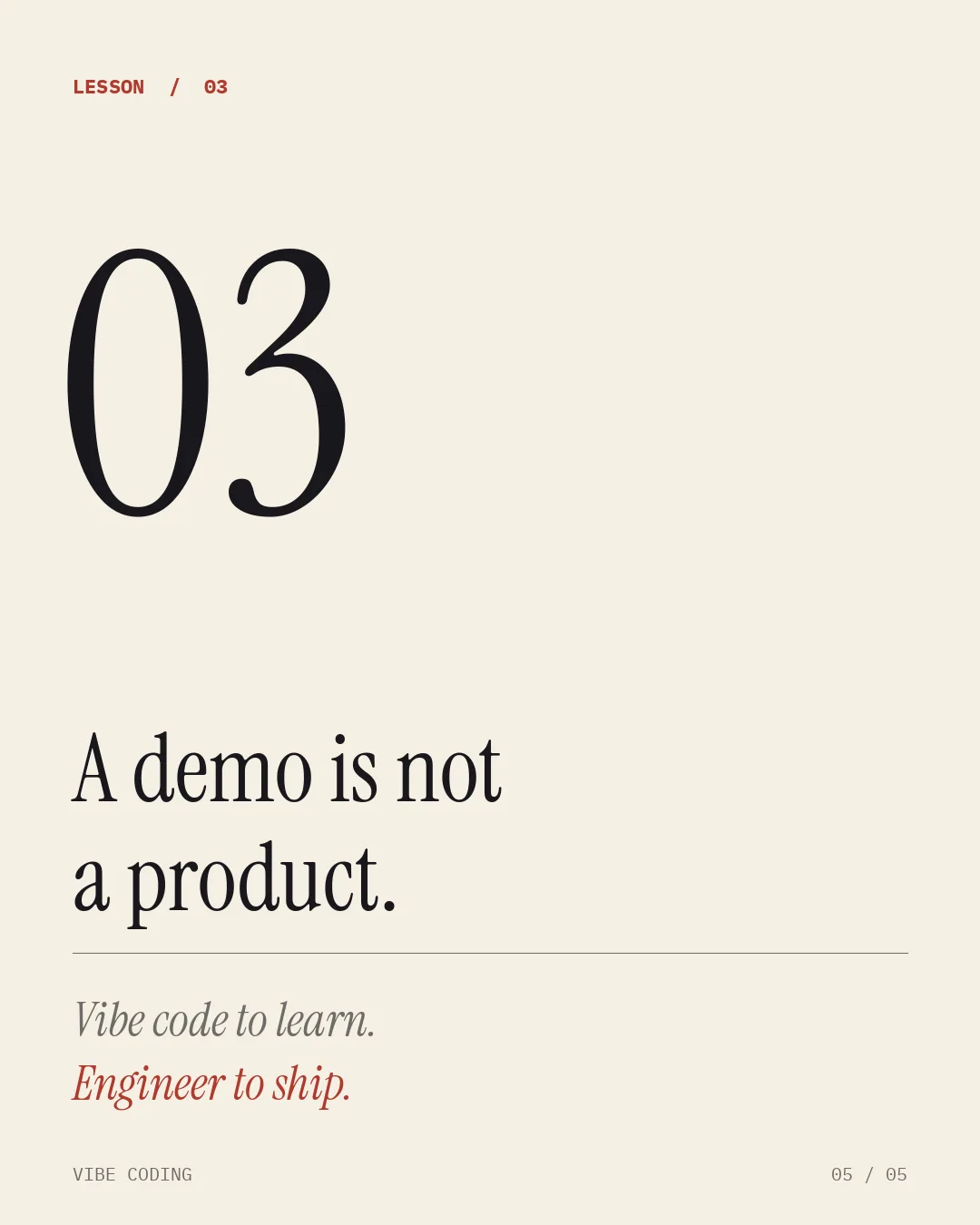
- A demo is not a product. Vibe coding is the best prototyping tool in history, but security, scale, failure modes, state and edge cases are where actual engineering lives. Vibe code to learn. Engineer to ship.

"We can 'AI' almost everything now — even I can build it."
Seems to be the industry promise. And the general impression in the past year when I've spoken to many entrepreneurs and senior corporate leaders about vibe coding. Usually said by someone who's never coded, never worked in digital or technology, never shipped anything technical.
The truth? You might be absolutely right — if you're building an online calculator. Anything more, and you start to hit the harsh truth: vibe coding can work beautifully, but you still need someone who knows the right questions to ask.

Validating vibe codingCan you vibe-code a real AI product, not just a demo?
I gave myself a challenge to set out to build something slightly more complex. A fully integrated WhatsApp voice agent that would act as my personal assistant that sounds like me, acts like me, and runs my life.
Three big lessons landed hard. Having the experience I have, I should have known all of them (so shame on me).
Lesson 1: AI can't pick your stack. You have to.Can AI choose your technology stack for you?
Anything real (not a calculator) needs architecture. Layers of software and services that talk to each other. "Build me a calculator" gets you a calculator in minutes in pure code — but where does it live? What CMS updates it? How does a non-technical person change a value without opening a chat window? The AI doesn't ask. You have to.
Similarly in this situation, when faced with this challenge, natural questions like: How will WhatsApp handle voice plug-ins? Can the stack I've chosen handle landlines and mobile lines? How do I adjust latency of response?
Did I ask AI? Of course. And I can say with conviction — it knew less than I did. It made confident suggestions on the well-documented stuff, and was hand-wavy or wrong on everything else.
Lesson 2: AI sees the code. You see the system.Why do vibe-coded prototypes break when you build further?
My agent prototype worked the first time I tested it. Then the webhook timed out. Then the voice clone drifted. Then the memory broke between sessions. Each time the AI could fix the piece I pointed at, but it couldn't see that the pieces weren't holding together. That's the cliff nobody warns you about. If you don't understand the system, you can't tell the AI where to look.
Lesson 3: A demo is not a product.What separates a working demo from a working product?
There's a gap between "it worked once on my laptop as a broad concept" and "it works at 2am when I'm asleep and a real user is depending on it." Vibe coding is brilliant at closing the first gap. It does almost nothing for the second. That gap is where actual engineering lives — security, scale, failure modes, state, edge cases.
So am I anti vibe coding? Not at all. It's the best prototyping tool in history. I now use it to kill bad ideas cheaply and validate good ones fast.
But I stopped confusing a working demo with a working product. That's the lesson I'd pass on.
Vibe code to learn. Engineer to ship.
About the author
Kenneth Phua
Founder, Konverta.ai
Kenneth is a Singapore-based digital, data and AI leader with 15+ years of experience, including senior global roles at Coca-Cola, where he was the Global Head of Digital Strategy and Innovation. He has advised C-suite leaders across FMCG, retail, property, hospitality and luxury, and now applies the same playbook to Singaporean and Asian corporates and SMEs through Konverta.ai.
The newsletter
Weekly insights in digital, data and AI.
If you haven't gotten digital right, you're probably not getting AI right either
Enterprises are repeating their digital transformation mistakes with AI. Three patterns to recognize and fix before the next migration project.
Work with Konverta.ai
Got a prototype that needs to become a product?
Talk to Konverta.ai about the architecture, the system and the engineering it takes to ship AI that works at 2am.
Prefer a form? Contact us.